

Indian woman consumer is not a monolith but a spectrum of distinct mindsets


Let me start with a question.
How many of you have seen a fashion brand do incredibly well in its first few years—and then quietly disappear?
It happens all the time, especially in India. We often blame changing trends, social media, or market saturation. But in reality, the problem is much simpler—and much more fundamental. Most brands don’t fail because they lack good design. They fail because they never clearly decided who they were designing for.
In India, women consumers are not one single category. A woman who experiments with avant-garde silhouettes is very different from someone dressing for a corporate dinner, and both are different from someone who values comfort above everything else. Yet many brands try to speak to all of them at once.
Today, we’re going to look at consumer segmentation, not as a marketing concept, but as a design tool. We’ll break Indian women consumers into four broad behavioural types and understand how identity, culture, comfort, and occasion shape what people wear. Once you see this clearly, you’ll also understand why some brands last—and why others don’t.In the Indian fashion ecosystem, it is common to see brands achieve rapid success in their early years—only to fade into irrelevance later.
While this failure is often attributed to changing trends or market saturation, the deeper issue lies in poor or unclear consumer segmentation. For fashion designers, especially at the master’s level, understanding who you are designing for is as critical as what you design.
Indian women consumers are not a single, uniform group. Their fashion choices are influenced by identity, culture, social roles, comfort, and timing. A brand that attempts to cater to everyone eventually loses coherence. Clear segmentation allows designers to build consistency, relevance, and longevity.
Broadly, women consumers in India can be understood through four behavioural segments.
The Individualistic Consumer: The Innovator
This segment represents the first adopters of fashion trends. These consumers use fashion as a form of personal distinction and identity signalling. Clothing, for them, is not just aesthetic—it is ideological and expressive.
They are drawn to:
Experimental silhouettes and avant-garde design
Cross-cultural aesthetics, such as a Japanese kimono silhouette executed in Indian block printing
Designers like Gaurav Gupta, who challenge conventional forms and materials

These consumers actively seek:
Limited editions
Experimental crafts and restricted colour palettes
Non–mass-produced garments
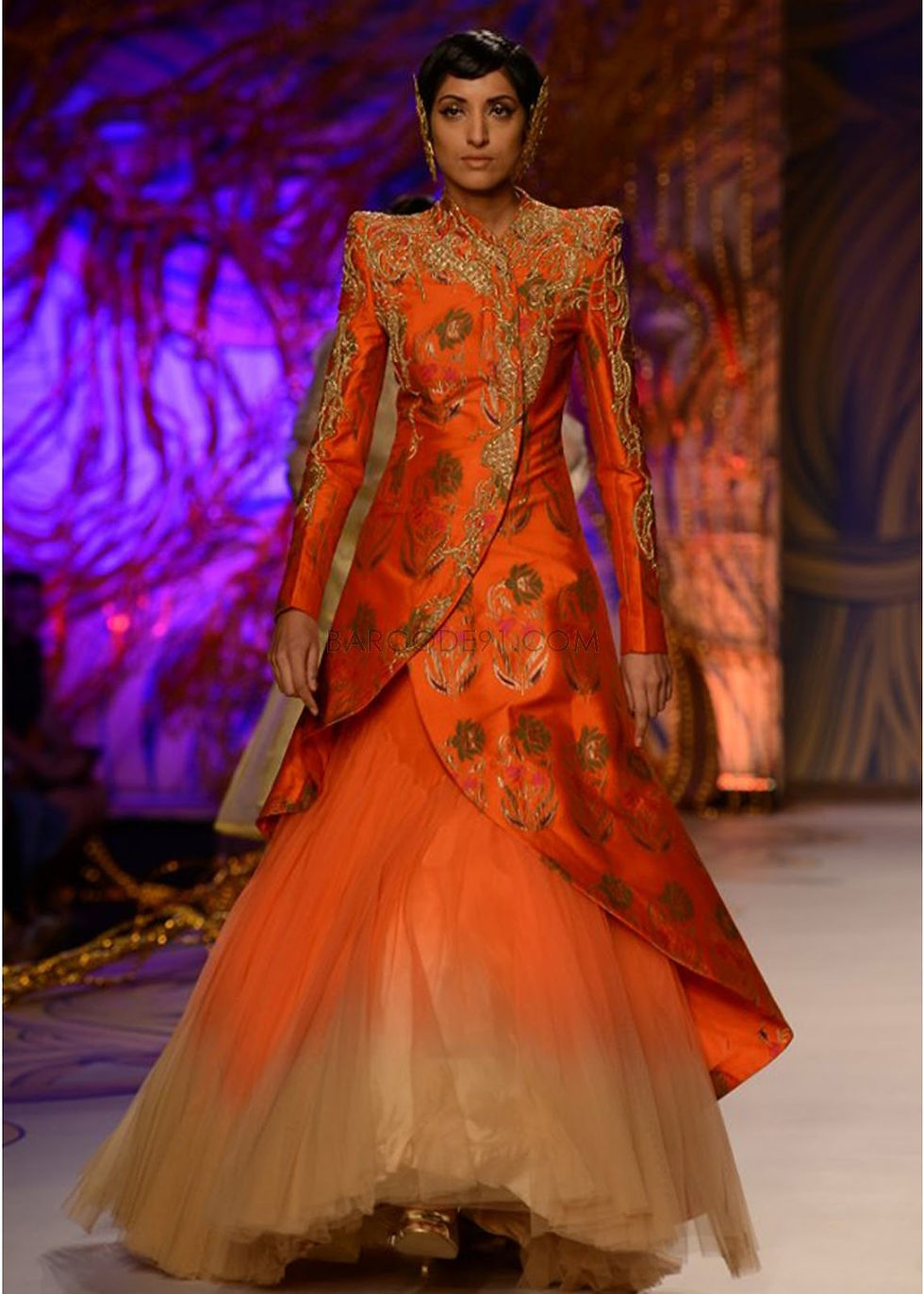
Here, scarcity is the key driver of value. The rarity of the piece enhances its desirability. This segment creates cultural capital—media attention, runway narratives, and trend initiation. However, they are often less concerned with comfort, repetition, or long-term usability.
For designers, this segment allows maximum creative freedom but offers limited scalability.
The Mimic: The Trend Follower
Mimics adopt trends after they have been validated—socially, culturally, and visually. They do not seek originality; they seek acceptance.
This segment explains the success of brands like Zara, which master the art of fast replication:
Translating runway or influencer fashion into wearable, culturally acceptable forms
Filtering global trends through local norms
For example, a skirt with a high slit may be fashionable internationally, but its adoption in India depends on cultural comfort and social validation.

Key characteristics:
Strong dependence on visibility and approval
Large social influence and peer networks
Speed is critical—delay results in irrelevance
For designers catering to Mimics, trend forecasting and rapid execution are more important than originality.
The Pace Setters: Occasion-Driven Traditionalists
This is one of the largest consumer groups in India. Their fashion choices are governed by appropriateness, etiquette, and occasion.
They value:
Correctness over experimentation
Cultural legitimacy
Role-based dressing (professional, ceremonial, political)
Designers like Sabyasachi exemplify this approach through occasion authority—designing for weddings, rituals, and formal events where tradition and dignity matter more than novelty.

Luxury houses like Chanel also align with this philosophy:
Minimal deviation from signature silhouettes
Repetition of codes
Controlled innovation
Interestingly, many Mimics eventually transition into this segment as their social roles evolve.
The Classic Consumer: Comfort and Functionality Seekers
The Classic segment prioritises comfort, durability, and functionality over fashion cycles.
Their expectations include:
Reliable sizing
Fabric longevity
Ease of maintenance
Strong after-sales trust
Brands like Uniqlo cater to this group by focusing on:
Fabric innovation rather than design innovation
Functional aesthetics
Everyday usability

If innovation occurs, it is subtle—perhaps a change in fabric composition or performance, not silhouette.
This segment offers designers high loyalty but demands consistency rather than creativity.
Strategic Implications for Designers
A crucial mistake many brands make is attempting to cater to all four segments simultaneously. Successful brands consciously choose one or two segments and design accordingly.A brand targeting Mimics will reinterpret what innovators wear, ensuring cultural comfort and affordability

A brand targeting Mimics will reinterpret what innovators wear, ensuring cultural comfort and affordabilityA brand targeting Pace Setters will emphasise appropriateness, authority, and occasion
Public figures like Rekha or Hema Malini, whose identities are rooted in dignity and tradition, naturally align with traditionalist segments due to their political and cultural roles
Importantly, buying motivation changes over time.
A consumer may begin as an innovator in her youth, become a mimic during social integration, and later evolve into a pace setter or classic consumer as responsibilities and roles shift.
Conclusion: Designing with Clarity
For fashion designers, segmentation is not a marketing afterthought—it is a design decision. Understanding consumer psychology allows designers to:
Build a coherent design language
Avoid brand dilution
Achieve long-term relevance
Fashion does not fail because trends change.It fails when designers lose clarity about who they are speaking to.


Comments